When you put your belongings into storage, you want them to come out looking much the same as when they went in. That can be harder to guarantee than it sounds, especially when you’re storing furniture, electronics, artwork, photographs, or family heirlooms.
Temperature and humidity can have a significant effect on stored belongings. This is one reason climate-controlled storage can be an important consideration when you’re moving, renovating, downsizing, or simply need to store household items for an extended period.
The Library of Congress recommends a stable environment for valuable objects and warns against storing them in places such as attics, basements, and garages where temperature and humidity can fluctuate. ***
If you’re preparing belongings for storage, here are some practical tips for protecting the things you don’t want to replace.
Why Climate Controlled Storage Matters
A typical garage, attic, basement, or other unfinished storage area can experience substantial changes in temperature and humidity throughout the year. Those fluctuations can be especially hard on materials such as wood, paper, photographs, fabrics, and certain electronics.
Climate controlled storage provides a more stable environment, helping reduce exposure to extreme temperatures and moisture.
That doesn’t mean every item requires the same storage conditions. In fact, the National Park Service points out that different collections can have different environmental needs. The important takeaway for homeowners is simple: stable conditions are generally better for valuable and sensitive belongings than repeated swings between hot, cold, dry, and humid environments.
Tips for Storing Furniture
Furniture can take up a lot of room, which makes it one of the most common reasons homeowners need storage during a move.
Before furniture goes into storage, make sure it is clean and dry. Dust and dirt left on a surface can become more difficult to remove later, while moisture trapped against wood or upholstery can create problems.
Whenever possible, avoid placing furniture directly on the floor. The Library of Congress recommends keeping valuable objects off floors and away from areas where leaks, vents, heaters, or other environmental hazards may be present. ***
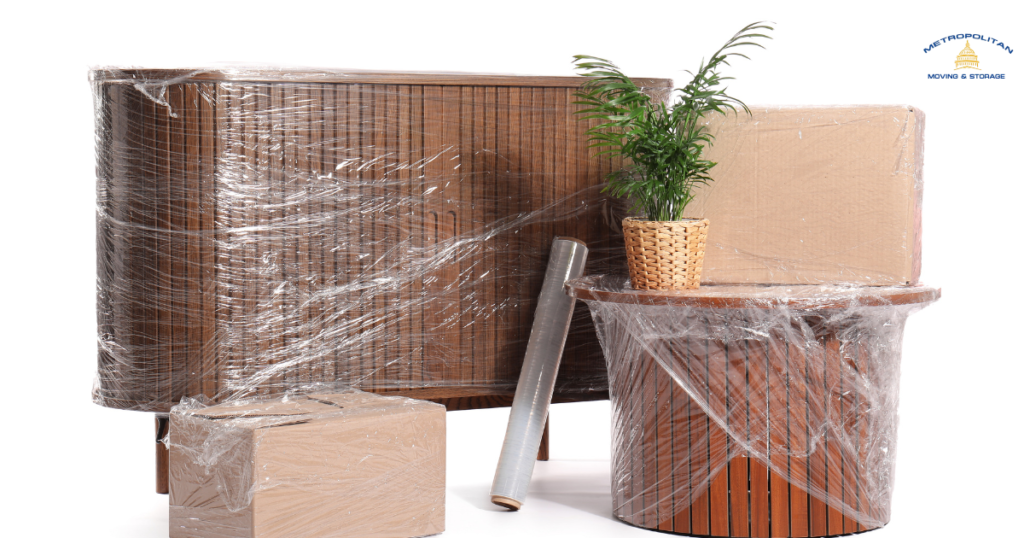
Furniture should also be properly protected during transportation and storage. Metropolitan Moving & Storage wraps stored belongings with protective blankets made from a durable five-ply foam-and-paper blend before placing them into interlocking wooden storage crates. Items are inventoried and assigned tracking numbers so they can be located when they’re ready for delivery.
For valuable antiques or specialty furniture, ask your moving and storage company about appropriate handling before the item is packed away.
Protecting Electronics During Storage
Electronics can be particularly sensitive to environmental conditions. Computers, televisions, audio equipment, gaming systems, and other devices should be cleaned and prepared before being placed in storage.
Start by disconnecting equipment and securing loose cords. If you still have the original packaging, it may provide useful protection. Otherwise, use appropriate protective materials designed for moving and storage. Avoid putting electronics into storage while they are damp or dirty. Give equipment time to become completely dry before packing it.
It is also a good idea to keep track of which cables and accessories belong with each device. A simple label can save you considerable frustration months later. Metropolitan Moving & Storage’s moving guidance specifically recommends disconnecting electronic equipment and securing the cords before a move.
Give Family Heirlooms Extra Attention
Family heirlooms are different from ordinary household belongings because their value often cannot be measured in dollars.
An old photograph, handwritten letter, piece of furniture, artwork, or family keepsake may represent generations of memories. That makes proper storage particularly important.
The Library of Congress recommends a good environment, good storage, and careful handling when preserving family heirlooms. Its guidance recommends stable temperatures, controlled relative humidity, limited exposure to light, and keeping objects away from leak-prone areas, heaters, vents, and direct sunlight. ***
For photographs, documents, scrapbooks, and similar materials, consider using preservation-quality materials rather than ordinary cardboard, tape, or plastic products of unknown composition. The Library of Congress recommends materials such as acid-free and lignin-free paper for certain archival items and identifies polyethylene, polypropylene, and polyester as stable plastics for preservation uses. ***
If you have an especially valuable or fragile heirloom, consider having it professionally appraised and insured before placing it into storage.
Keep an Inventory of What’s Going Into Storage
One of the easiest ways to make storage more manageable is to keep an accurate inventory. Write down what you’re storing and, if appropriate, photograph valuable pieces before they go into storage. Label boxes clearly, but avoid putting sensitive personal information on the outside.
A detailed inventory can also make it easier to find something when you need it later.
Climate controlled storage takes this concept a step further by inventorying incoming belongings and assigning tracking numbers to stored items.
Climate Controlled Storage Can Make Moving Easier
Storage is often needed because life doesn’t follow a perfect schedule. A closing may be delayed. A renovation may take longer than expected. You may be downsizing or temporarily moving into another home.
In those situations, having your moving company handle transportation, storage, and eventual delivery can simplify the process. Climate-controlled storage provides a safe, convenient option for both short- and long-term needs, allowing your belongings to be stored securely and delivered when you’re ready.
Give Your Belongings the Protection They Deserve
Whether you’re storing a living room full of furniture or a few boxes of family memories, the goal is the same: keep your belongings protected until you’re ready for them again.
Climate-controlled storage, proper preparation, careful handling, and a stable environment can all help reduce unnecessary wear and damage. And when you’re dealing with irreplaceable family belongings, taking those extra precautions can provide considerable peace of mind.
Need Climate Controlled Storage in the DMV?
If you’re moving, renovating, downsizing, or simply need a secure place for your belongings, Metropolitan Moving & Storage can help. The company offers short- and long-term climate controlled storage with inventory tracking, protective wrapping, and delivery when you’re ready.
Call 301-279-0090 for Maryland and Washington, D.C., or 703-837-0091 for Virginia to schedule an evaluation and discuss your storage needs. Metropolitan Moving & Storage serves Laurel, MD, Washington, D.C., Silver Spring, Rockville, Bethesda, Columbia, College Park, MD, Northern Virginia, and surrounding DMV communities.
*** For additional guidance on preserving family heirlooms, the Library of Congress website offers helpful preservation information for homeowners and families.